A huge aid in acquiring banned music during the regime was the technology in the form of a reel-to-reel tape recorder. I didn’t have any trouble getting classical music. After saving up thirty-six Czechoslovak korunas, I could always buy another symphony by Ludwig van Beethoven. The Western ones were in a completely different price range, namely 200 – 300 CZK for one vinyl record. It’s worth noting that the average wage at that time was just over two thousand Czechoslovak korunas per month. So it was crucial to firstly have a reel-to-reel tape recorder and secondly to be connected with friends and classmates who had contacts in the West.
However, the most important thing was the unofficial record exchange. Here, records could be bought or exchanged. Occasional police raids served as adrenaline-filled excitement to raise the value of seized banned music. I participated in both positions: dispersed and detained.
I was dispersed when the exchange took place on Petřín Hill. Here, I experienced an attack that began suddenly without any warning. I don’t know what goal the vigilant police had in mind when they threw things at us, nor did I even notice what substance caused us all to cry and simultaneously retreat rapidly. The escape was so fast that after dispersing the unauthorized activity, a considerable amount of records must have remained on the battlefield. Perhaps this was the goal of the entire police operation, so that the comrades could also listen to that harmful music they warn about at party meetings. The aftermath of this played out in a Prague tram. As we were heading home, the substance that clung to our clothes managed to make fellow passengers cry as well. Thus, inadvertently, even though they might have been content with Michal Davit from Czech radio, they became part of our struggle for banned music.
I was detained when the exchange took place in Strahov. Paradoxically, I arrived late, after the whole event had already been dispersed by the police. I stood at the bus stop to return home. This time, the order of the operation was probably to catch as many samples as possible of those elements who every Sunday morning get up and go out in any weather to listen to something other than what the comrades served up on Czechoslovak socialist radio. That they caught me too, even though I hadn’t even managed to participate this time, was probably due to the special bag for vinyl records that I was equipped with.
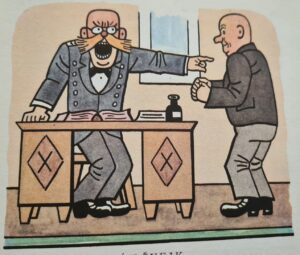
Some time ago, my friend Milan and I brought it back from France. It was fortunate that they didn’t catch us then, when it was full of records, and we, after recording them at home, had a great business success at the exchange. But this time, only three records were ashamed in it, so when I waited with other exchange-goers in the overcrowded VB office, I wasn’t even nervous. What could they possibly do to me? I even found capacity for a little joke. I noticed a guy trying to infiltrate the conversation of those waiting. He was only disguised by the top of his clothing, pretending to be another caught participant of this Sunday stroll. His police trousers gave him away. I ended his espionage mission with the question, “Excuse me, where is the restroom?” He directed me very angrily and reluctantly, but the purpose was fulfilled, we didn’t see him anymore. When my turn came, the interrogation room was full of officers, as if it were some kind of police training exercise. After opening my suitcase and counting the contraband, the investigator, quite annoyed so I wouldn’t see too much, turned to his colleagues, probably asking why they had caught me. I saw rather shrugged shoulders of the law enforcement officers. He quickly concluded that I probably wasn’t the right target for their operation. He closed the suitcase and said, “Alright, go and don’t do it again.” I couldn’t help but respond with a question, “What shouldn’t I do, stand at the bus stop?” At that moment, the scene resembled an episode from Jaroslav Hašek’s book “The Good Soldier Švejk.” Even the illustration by Josef Lada, with a bewildered face and a hand pointing to the door, also throws Švejk, like this time, me, out of the state institution.