
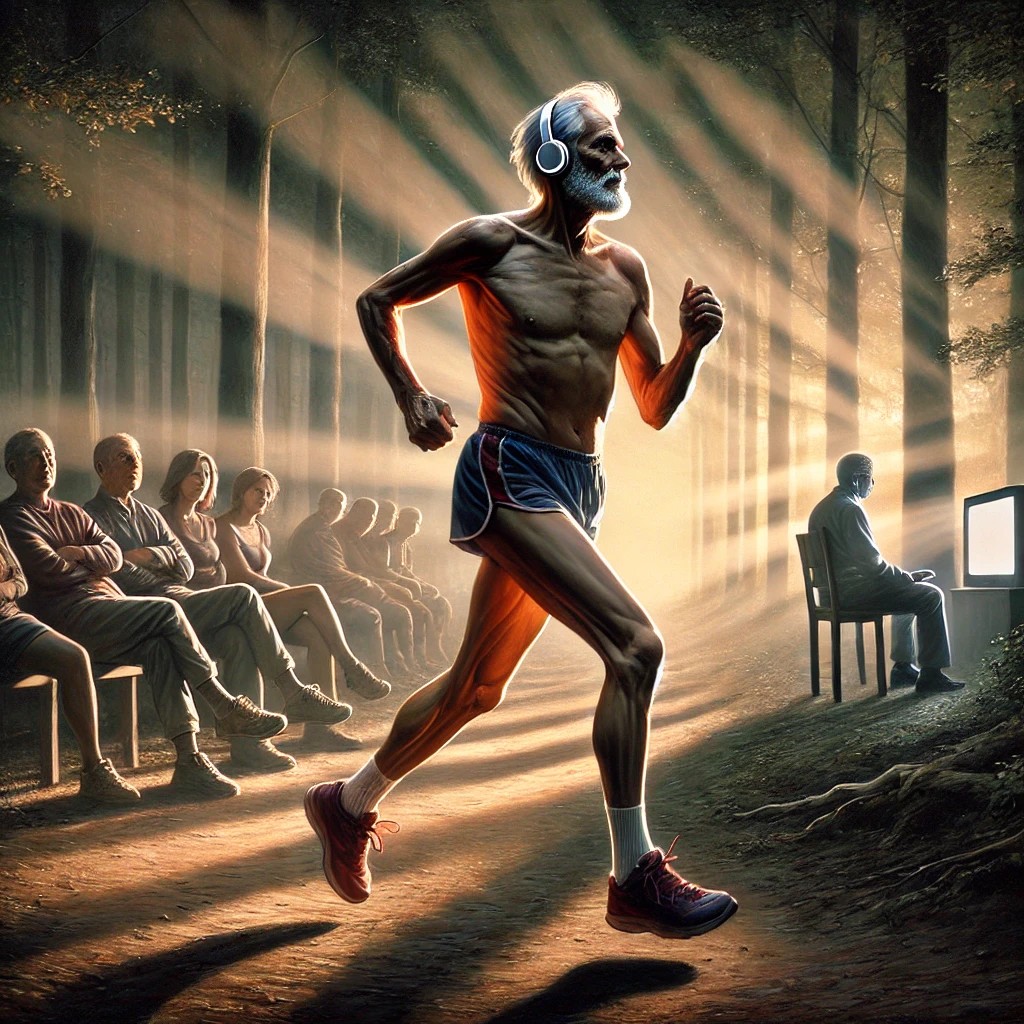
People often ask me: “And how are your joints holding up?”
Some doctors were quick to warn me, right from the start of my running journey, that joint problems would catch up with me sooner or later. This question keeps popping up, and it just shows how strong the myth still is — the belief that running wears out your joints and leads straight to arthritis.
But science tells a different story. Researchers from American universities spent twenty years tracking the health of a thousand runners and another thousand non-runners. The result? Surprisingly, those who didn’t run were more than twice as likely to suffer from arthritis compared to the runners.
Why is that? The explanation is actually pretty simple. Every time your foot hits the ground, the cartilage in your ankles, knees, and hips gets gently compressed and then released again. Think of it like tiny pistons working away. This natural movement brings more oxygen and nutrients into the cartilage, keeping it healthy and strong.
So, no — our joints don’t work like car parts that wear out the more you use them. Quite the opposite: it’s inactivity that destroys them.
Our bodies just weren’t built to sit still.
Of course, I’d love to stop here and say, “That’s it, go run!” But there’s one big catch. If you look around, most people today aren’t moving much. They sit in cars, on couches, in front of screens — and, let’s be honest, many carry extra weight.
And that’s where the problem starts. If people went to complain to “Mother Nature’s customer service” saying, “My joints hurt when I try to run!” the most common reply after checking the real cause would probably be: “Your problem is extra weight.”
Our joints were designed for bodies with a BMI under 25.
And there’s more. Injuries also take their toll — often from team sports, ski falls, rollerblading accidents, or cycling crashes. Those definitely don’t do your joints any favors. And then, of course, there’s genetics — some things you simply can’t change.
But in most cases, the biggest enemy is excess weight. If that’s the case, the best plan isn’t to push yourself straight into running. Start by walking or swimming, and only once you’ve slimmed down to what I call “running weight” will your joints thank you for lacing up those running shoes.