
When in my previous article I was praising the latest technological marvel—artificial intelligence—I subconsciously skipped over what, for me, is the most crucial device. The one that completely reshaped my life and even redirected my trajectory away from a voluntary exit.
If someone has strong willpower, they don’t need any crutches. They decide, for instance, that they have what it takes to win races. They begin training; their will keeps them going and results come. Medals shine on the podium, and interest from better women follows.
Obviously, those lines don’t describe my case.
When I was fifty-six—almost twelve years ago—as an overweight alcoholic with type‑2 diabetes, I started running. It certainly wasn’t due to willpower. In the running pouch I carried a device that fed music, my lifelong addiction, into my headphones. It also had a GPS that tracked all my runs and allowed me to share them online with other athletes. That combination fully replaced my lack of willpower.
It’s clear what that device was. Nothing else would have motivated me to run a full lap around the Earth over eight years and eight months—and to keep going for nearly twelve years. Yes—it’s thanks to the smart mobile phone.
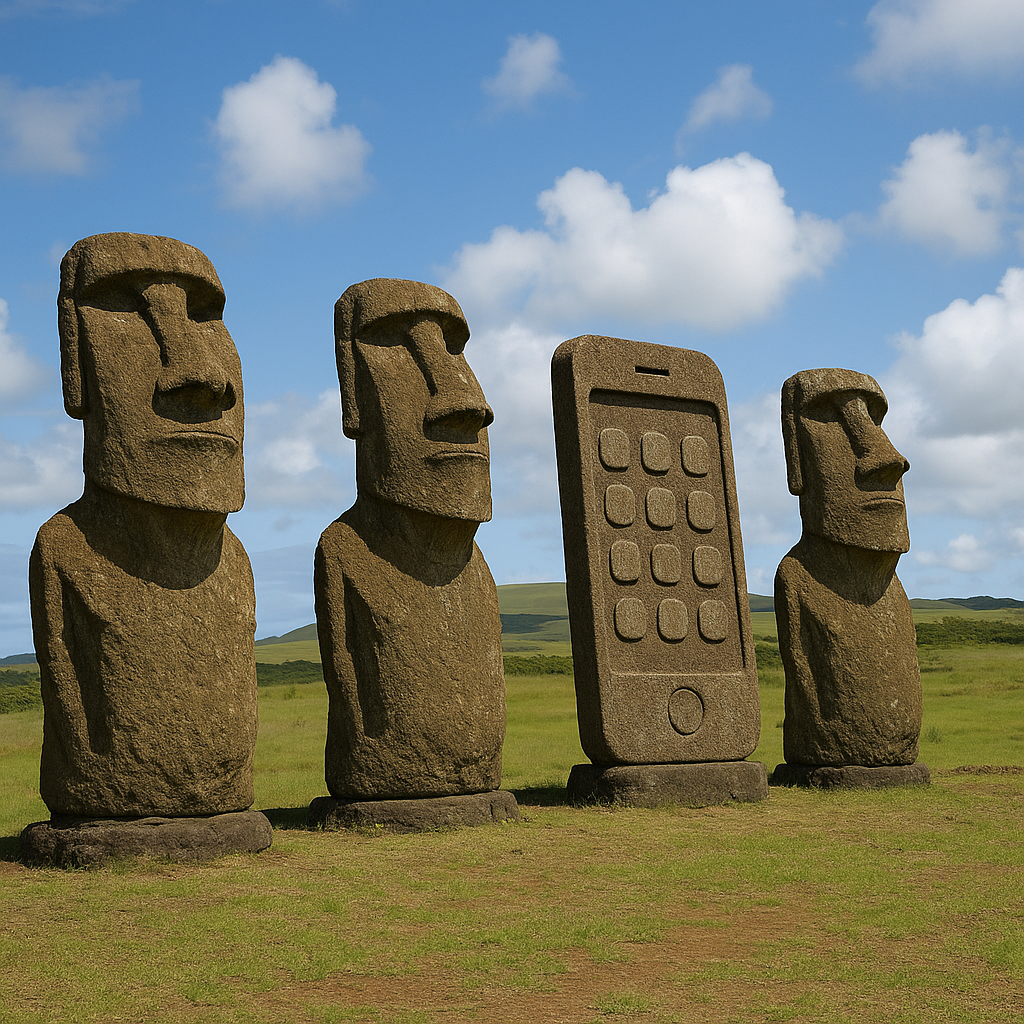
If I belonged to a tribal society, I’d probably build a statue for it and pray at its feet.
That small communicator has a completely different reputation in the Bohnice addiction treatment center. I visit regularly to share my experiences with current patients and alumni. Most of them struggle with combinations of addictions—alcohol, drugs, even gambling. There, a smartphone is more of a shame—sometimes literally is set on a bench like a kneeling penance. It has become the extended hand of companies unscrupulously profiting from gambling addicts.
They can be driven into debt traps.
The guru of these sessions, the always-smiling head physician Karel Nešpor, proudly carries a Nokia 3720, released in 2009—and it’s a gem worth bragging about in that setting.
Gambling, thankfully, was never one of my addictions. I didn’t even play small-stakes games. But that’s not the case for many who fill the cafeteria in pavilion no. 31. I’ve found that the main — and sometimes only — defense for gamblers, including those who have already left the rehab, is to own a simple phone like the one Dr. Nešpor uses. A smart phone, on the other hand, can accelerate their exit from this “vale of tears.”
Sometimes that’s not enough, and the patient completely cuts off from the digital world—they don’t have a bank account and avoid the internet altogether.
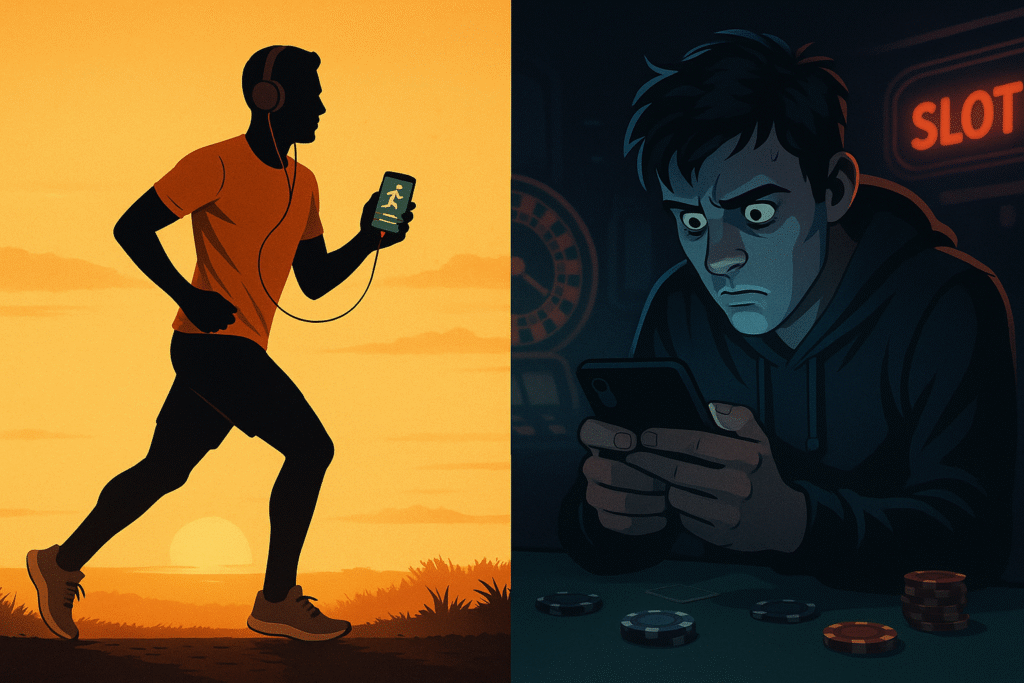
So far, I’ve described two extremes—how a phone can be used or misused in our world. Yet I firmly believe it has the potential to get people moving—unlike a computer, which more often pins them to a chair.
It’s ubiquitous, connected to GPS and the internet—and that’s exactly what makes it a device capable of offering countless ways to get its owner moving.
A clear future—already partially realized in the US—is the possibility of offering health‑insurance discounts based on activity measured by your mobile phone, motivating users toward a healthier lifestyle. A big surprise for me was learning that mobile phones could also save on car insurance. Drivers are scored based on how safely and efficiently they drive—and pay accordingly.
As if the gambling industry is attempting a partial redemption, mobile games have appeared that use a phone’s sensors to get today’s Homo sapiens moving.
The flagship of this trend in 2016 was a game that used not just GPS, but augmented reality. Players collected Pokémon and completed tasks in the real world. Pokémon Go, downloaded by hundreds of millions since then, gave birth to the term exergaming (games that combine play with exercise). I only dabbled in it—it’s a bit too manipulative for me to use the phone while actively moving. I prefer launching an app at the start of a run and checking my success at the end.
And that brings me to the earliest “app” I installed, even on pre-smartphones—and it wasn’t an accident. Sports Tracker was developed at Nokia, so I discovered it on my Nokia N85. Interestingly, this revolutionary model appeared around the same time as Dr. Nešpor’s phone, but unlike it, was already internet-connected and GPS-enabled.
Then came a defining year for me: 2013. By then I had a smartphone—and not just any smartphone. It could shoot and record 3D video. I’m passionate about that technology even today. Back then, HTC bravely charted new territory. Today, short 3D films I recorded can be seen on my YouTube channel. And when I installed the well‑known Sports Tracker app, thanks to that combination—running shoes, music, and technology—I started running and turned my life around 180 degrees.
And since I’ve now run over 55,000 km, I definitely won’t be changing that app.